Bridges to Where?
Bishop Schneider’s Appeal on the Eve of Écône

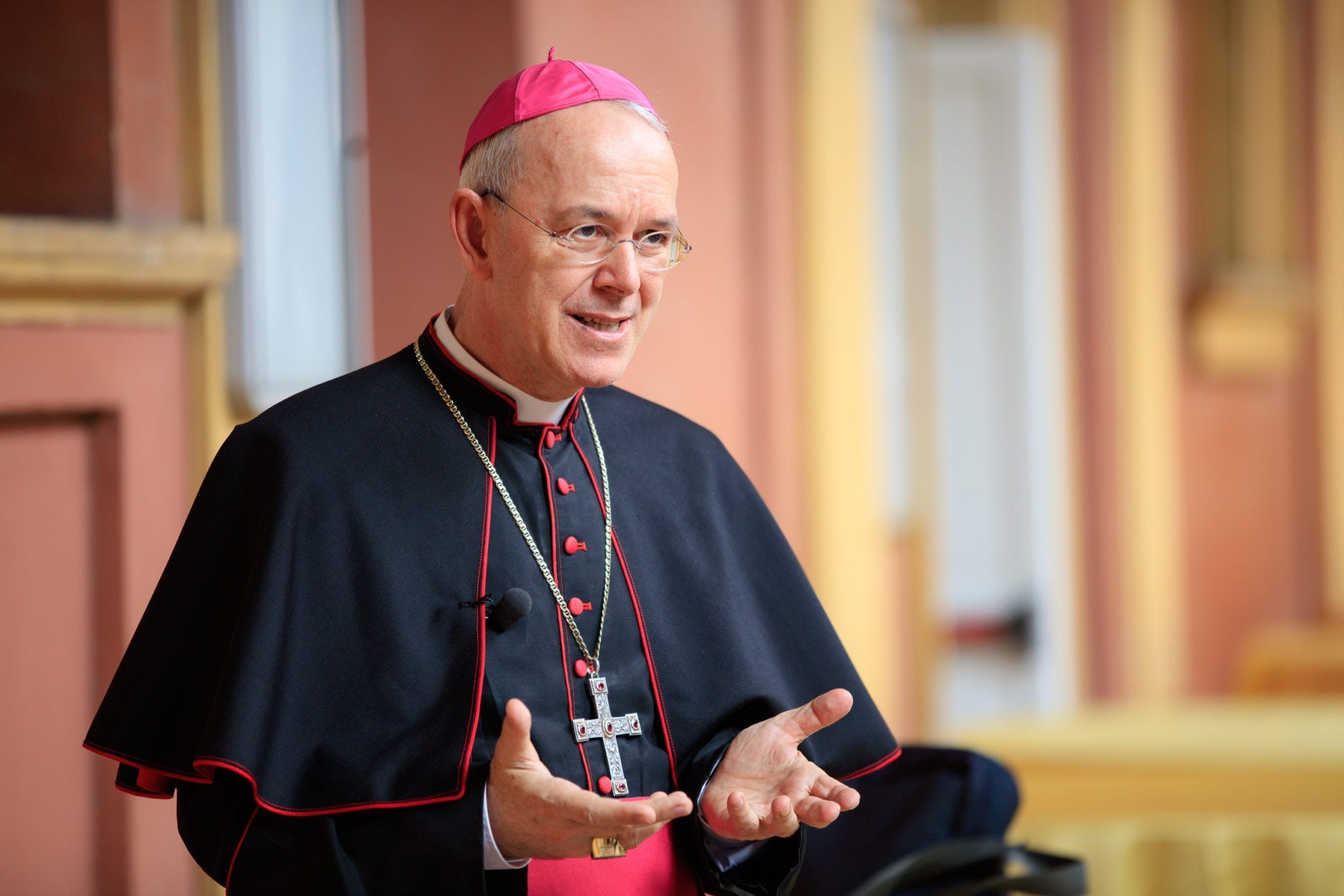
With the episcopal consecratons’s approaching in Écône, Bishop Athanasius Schneider has published a final-hour appeal asking Pope Leo XIV to grant the apostolic mandate that would permit the four episcopal consecrations of 1 July to proceed validly. The piece is framed in the language of pastoral generosity, of bridges, of paternal hearts. Examined slowly, it is none of these things. It is the request, from a bishop who shares the position of those he claims to represent, that the Holy Father lend the authority of his office to perpetuate a refusal of the Second Vatican Council. This is a response.
On the eve of Écône, Bishop Athanasius Schneider has issued a final-hour appeal to Pope Leo XIV, urging the Holy Father to grant the apostolic mandate that would permit the four episcopal consecrations of 1 July to proceed validly and licitly. The piece is published as an “exclusive” by Diane Montagna and is framed, throughout, in the language of pastoral generosity: the Pope as a “true father,” a “builder of bridges,” a paternal heart that can, by an act of magnanimity, make an exception for the sake of unity. The appeal commends itself to the faithful as an act of charity offered on behalf of a portion of the flock caught in a genuine dilemma of conscience.
It is none of these things.
What Bishop Schneider is actually asking — examined slowly, with the texts in hand and the canonical record open — is that the Holy Father lend the authority of his office to perpetuate a refusal of the Second Vatican Council, to consolidate a movement that has informed him with breathtaking serenity what the bare minimum required for Catholic communion is, and to give episcopal continuance to a fraternity whose Superior General has declared that defining the conditions of communion “does not belong to us” — a refusal to engage the question the Holy See has placed squarely before him. This is not the pastoral generosity of a builder of bridges. It is canonical capitulation dressed in the garments of charity. And from a priest who has celebrated the reformed liturgy for fifty-two years and watched, over those years, the use to which appeals of this kind have been put, I must say plainly: what Bishop Schneider has placed before the faithful on the eve of an illicit consecration is, in the most precise sense of the word, a scandal.
What Is Actually Being Asked
Let us be precise about the request. Bishop Schneider asks the Holy Father to grant the apostolic mandate required by canon 1013 for the consecration of bishops, so that the four ordinations of 1 July may proceed validly and licitly. He acknowledges in passing — and rather defangs the point — that without such a mandate the consecrating and consecrated bishops would incur the latae sententiae excommunication established by canon 1387 of the 1983 Code, an excommunication that operates by force of the law itself, not by any pronouncement of the Holy See.
It is worth dwelling on this. Bishop Schneider frames the alternative as the Pope “pronouncing an excommunication” or “imposing a new anathema.” This is canonically misleading. The Holy Father does not need to pronounce anything for the excommunication to take effect; the act of consecration without papal mandate triggers the penalty automatically, by the operation of the law that has stood since the 1917 Code. What Bishop Schneider is therefore asking is not that the Holy Father refrain from an act of severity. It is that the Holy Father grant a mandate to prevent an excommunication that the law itself will otherwise impose. The framing of Leo as a magnanimous father who might extend or withhold an act of severity is a rhetorical construction. The reality is that Bishop Schneider is asking Leo to set aside the law in order to authorize the consecrations — a law that is no mere procedural ordinance but the juridical expression of the ecclesiology of unity and apostolicity that constitute the Church.
He argues, of course, that the consecrations would not in any case be intrinsically schismatic, because canon 1387 is classified under “Offenses against the Sacraments” rather than under “Offenses against the Faith and Unity of the Church.” This is a misdirection by formal classification, and a specious one. The act of consecrating bishops in defiance of the express will of the Roman Pontiff is at once an unlawful conferral of the sacrament and, in its concrete circumstances, an arrogation of jurisdiction that ruptures hierarchical communion. John Paul II’s Ecclesia Dei adflicta of 2 July 1988 — issued in immediate response to the same act Bishop Schneider now wishes to authorize — judged precisely this. Cardinal Fernández’s communiqué of 13 May 2026 reaffirmed it. Cardinal Müller, whom Bishop Schneider might be expected to honor, has stated the same in unambiguous terms. The classification argument was answered in 1988. It has not become more persuasive in the intervening thirty-eight years.
Healing Counterfeited
The deeper problem with Bishop Schneider’s appeal is not canonical, however. It is that the piece, while continuously invoking unity, healing, bridges, and bonds, does the work of division on every page. This is the paradox at its heart, and the longer one sits with it, the more troubling it becomes.
Consider what Bishop Schneider himself believes about the Council that the SSPX rejects. He writes of “non-definitive teachings of Vatican II… whose formulations are ambiguous and difficult to reconcile with doctrines taught consistently by the Magisterium from the era of the Church Fathers through the period immediately preceding the Council.” He writes of “ritual and doctrinal deficiencies of the Novus Ordo Missae“ that “cannot simply be glossed over.” He writes that the implementation of the Council has produced “a so-called ‘Church of Vatican II’ or the ‘Conciliar Church’… a relativist religion adapted to the world,” and that “attempts to disguise this new trend toward an ambiguous, relativistic, and worldly form of the Catholic Church through a hermeneutic of continuity are dishonest and unconvincing.”
These are not the words of a bishop who accepts the Council and merely wishes to extend pastoral generosity to a flock that does not. They are the words of a bishop who, in substance, shares the SSPX’s view. Bishop Schneider and the SSPX hold, on the central question, the same position. What looks at first reading like a magnanimous appeal from a man in communion on behalf of a man not in communion is, on closer inspection, an appeal from a man who already shares the dissenting position to legitimize its institutional continuance.
This matters because the pastoral logic of the appeal works only if the bishop and the Society hold different positions on the central question — and they do not. Bishop Schneider must be presumed to accept the Council if his plea is to be heard as a plea for accommodation rather than as a confession of solidarity. The text reveals it to be the latter. The hermeneutic of continuity (interpreting the Second Vatican Council in continuity with previous Councils) is “dishonest and unconvincing” — words written by a bishop of the Catholic Church about the interpretive framework taught by Benedict XVI in his Christmas address to the Roman Curia in 2005, by Francis throughout his pontificate, and now by Leo XIV in his three Wednesday catecheses on Sacrosanctum Concilium. To dismiss the hermeneutic of continuity as dishonest is not to disagree with this Pope or the last. It is to disagree with the magisterial framework within which every Roman Pontiff since Paul VI has taught the Council.
The Continuing Scandal of the Novus Ordo Claim
There is a second paradox, and a more wounding one. Bishop Schneider has been a Catholic bishop in good standing for more than two decades. I assume that he celebrates the reformed liturgy with the books promulgated by Pope Paul VI and approved by every Pope since. And yet he writes, in 2026, of the “ritual and doctrinal deficiencies of the Novus Ordo Missae“ as if these were settled facts requiring no demonstration. He cites a single 2025 book by an Eastern Catholic Archimandrite. He provides no enumeration of these alleged deficiencies. He simply asserts them, in the manner Dom Louis-Marie de Blignières — writing from inside the Sedes Sapientiae world only days ago — identified as the characteristic technique of those who claim errors exist while failing to demonstrate them.
This is, fifty-five years after the promulgation of the Missale Romanum of Paul VI, an extraordinary thing for a Catholic bishop to do. Every Pope from Paul VI to Leo XIV has affirmed the legitimacy and goodness of the reformed liturgy. The consultation of the world’s bishops that preceded Traditionis Custodes confirmed that the reformed books are the unique expression of the lex orandi of the Roman Rite. Traditionis Custodes itself, however contested, is the canonically definitive expression of this judgment. And yet a Catholic bishop, on the eve of an illicit episcopal consecration, asserts the contrary in print as if it were uncontroversial.
This is not a private theological reservation. It is a public statement, addressed to the faithful, published on a widely-read traditionalist platform on the eve of an event the bishop hopes will compel the Holy Father to legitimize. To assert, in such a context, the “doctrinal and ritual flaws” of the reformed liturgy is to perpetuate the very doubts that make reconciliation impossible. It is to raise false hopes among the faithful who have refused the Council that those doubts are vindicated by a bishop of the Church. It is to give cover to the priests and laypeople who, for sixty years, have whispered against the Mass that has nourished the faith of nearly a billion and a half Catholics. What the appeal frames as advocacy for reconciliation functions, in effect, as endorsement of the position that prevents reconciliation.
The Disparagement of the Recent Pontificates
The appeal does not stop at the liturgy. Bishop Schneider singles out for criticism the entire trajectory of the post-conciliar magisterium: “certain statements in Amoris Laetitia that seriously undermine and even contradict Divine Revelation”; the “formal permission for divorced and remarried people to receive Holy Communion”; the “Declaration on blessings for same-sex couples, Fiducia Supplicans.” He invokes the “current, extremely confusing, synodal process” as the consummation of relativism. The cumulative effect is to indict the entire Francis pontificate as an aberration from which the Church must escape.
It is not necessary to share Bishop Schneider’s view of these documents to recognize that this characterization is itself the very polemic the appeal claims to wish to transcend. Pope Francis was not a relativist. His pontificate did not produce “a relativist religion adapted to the world.” The Synod on Synodality is not the construction of an “ambiguous, relativistic, and worldly form of the Catholic Church.” These are claims that have circulated for years in the traditionalist press; they are not theological conclusions. To embed them in a piece addressed to Pope Leo XIV — who has explicitly continued his predecessor’s synodal work and committed himself, in Magnifica humanitas itself, to its next phase — is to enable, in the same gesture, the disparagement of two recent pontificates.
What is one to make of a bishop who asks the present Pope to extend mercy to those who reject the Pope’s teaching authority, while himself characterizing the teaching of the previous Pope as “ambiguous, relativistic, and worldly”? The appeal collapses under its own logic. The bishop asking for clemency is the very bishop perpetuating the antagonism that requires clemency.
Cardinal Müller Has Just Spoken
It is worth pausing to seriously consider what has just recently been published. Cardinal Gerhard Ludwig Müller, former Prefect of the Dicastery for the Doctrine of the Faith and a cardinal whose sympathy for the older liturgy and whose frequent critique of curial overreach are matters of public record, has given a long interview in kath.net that takes up, point by point, the questions Bishop Schneider has raised. He is no progressive voice. He is the chief doctrinal officer the Church had for ten years, addressing precisely this matter in the days immediately before Écône. The interview deserves to be read in full. It is, when read, unanswerable.
On the Society’s reading of Dignitatis Humanae, Cardinal Müller is unambiguous: “The Fraternity of St. Pius X interprets religious freedom in the spirit of 19th-century relativistic liberalism, which rejects revelation and turned religion into a matter of taste.” The relativism Bishop Schneider attributes to the Council and to Francis’s pontificate, the cardinal locates squarely in the SSPX’s own position. On the claim — central to Bishop Schneider’s appeal — that the Novus Ordo contains doctrinal deficiencies, Müller is sharper still: “the unfounded accusation by the FSSPX that the Catholic Church, under Popes Paul VI, John Paul II, Benedict XVI, Francis and Leo XIV, has dogmatically deviated from the Catholic faith, absurdly counting the Novus Ordo Mass among the deviations.” Note the verb. Note also the enumeration of all five Popes — Leo XIV named in continuity. The “ritual and doctrinal flaws” Bishop Schneider asserts without demonstration are, in the professional judgment of the former chief doctrinal officer of the Church, an absurd accusation.
But the part of the interview most directly addressed to the appeal before us is on the very question of whether the consecrations of 1 July could be morally justified by the dilemma Bishop Schneider invokes. Cardinal Müller does not require many words: “Even if the ordination by a schismatic bishop — even in open opposition to the Pope — is valid, it cannot be dogmatically and morally justified by invoking the salvation of one’s own clientele. Only in a state of extreme persecution, when contact with the universal Church and with Rome is completely impossible, would the ordination of a bishop be morally justified in conscience before God and in the unity with the Pope that is presupposed in the faith.” This is the answer Bishop Schneider’s appeal cannot accommodate. The Society’s bishops are in valid contact with Rome. The Holy See, in February of this year, offered the Society doctrinal dialogue. The conditions Cardinal Müller names as the only conditions under which such consecrations could be morally licit manifestly do not obtain.
The cardinal goes further. He addresses the very posture Bishop Schneider’s appeal embodies: “The Pope will always go to the limits of what is possible in his ministry of ensuring or restoring the unity of the Church, while those who have strayed, in their spiritual arrogance, take this as an opportunity to set conditions.” This is precisely what Pagliarani’s “Declaration of Catholic Faith” does. It is also what Bishop Schneider’s appeal does. Both take Pope Leo’s evident pastoral generosity as the moment to dictate to the Successor of Peter the conditions of communion. Cardinal Müller’s name for that posture is “spiritual arrogance.” He applies it, in the same interview, to the SSPX bishops directly.
And on the patristic appeal at the very moment Bishop Schneider raises it, the cardinal supplies the correction the appeal requires. Bishop Schneider invokes Sophronius of Jerusalem. Cardinal Müller invokes the actual saints whose example the SSPX cannot honor without abandoning what it is doing: “Athanasius and Augustine did not distance themselves from the Church while she was still struggling to definitively overcome Arianism and Donatism.” This is the patristic example properly applied. The great defenders of orthodoxy in the Church’s history remained in communion. They wrote, they preached, they suffered, they argued — within the Church. The path the SSPX has chosen is, in Cardinal Müller’s words for it, the path “of the Donatists, the Jansenists, and the Old Catholics.” It is the path Bishop Schneider asks the Holy Father to ratify.
I cannot put the matter more plainly than the cardinal already has. The former Prefect of the Dicastery for the Doctrine of the Faith has, this week, addressed precisely the question Bishop Schneider has raised — at length, with the precision his office once carried, and to the same unmistakable conclusion. The Pope, Cardinal Müller writes, “may make certain concessions regarding secondary matters, but not concerning the substance of the faith, the sacraments, or the sacramental constitution of the Church.” Bishop Schneider’s appeal asks for precisely such a concession on precisely such a matter. The cardinal has, in advance, told us that it cannot be granted.
A Dilemma That Is Not a Dilemma
Bishop Schneider invokes, repeatedly, the SSPX’s “dilemma of conscience.” This is the rhetorical heart of his appeal: the Society is portrayed as caught between an impossible fidelity to a Pope who demands assent to error and an impossible abandonment of the faith. They have, on this telling, no choice but to consecrate bishops illicitly to safeguard the apostolic succession of a charism the Holy See has refused to recognize.
But the dilemma is constructed. The SSPX has had, by my reckoning, no fewer than four extended periods of formal engagement with the Holy See since 1988: under John Paul II, under Benedict XVI (the 2009 lifting of the excommunications, the doctrinal discussions of 2009–2011), under Francis (the granting of ordinary faculties for confession and marriage, and the repeated offers from Cardinal Müller), and most recently under Cardinal Fernández in February of this year. In each case the path back to communion has been laid open. In each case the Society has refused to walk it.
Dom de Blignières has documented the historical record on which any genuine assessment of the “dilemma” must rest. Marcel Lefebvre signed all the Acts of the Council, including Dignitatis Humanae. He did not publicly protest “errors of the Council” from 1965 to 1974. In November 1978, received by John Paul II, he declared himself “prepared to accept the Council read in the light of Tradition.” He signed, with Cardinal Ratzinger, the Protocol of Agreement of 5 May 1988, which explicitly provided for differentiated acceptance of magisterial texts according to Lumen Gentium 25. He repudiated the Protocol the next day — by his own admission, not because the Council was unacceptable but because he had lost confidence in authority.
This is not a dilemma of conscience. It is a refusal, sustained over six decades, to accept the legitimate exercise of the Church’s teaching office. A refusal does not become prophecy because Bishop Schneider has named it conscience. It does, however, give the refusal a dignity it has not earned, and it raises false hopes among the SSPX faithful that their position is the position of a bishop in good standing. In a sense, it is. That is precisely the scandal.
What Leo Should Do
What the Holy Father should do is what his predecessors have done. He should hold fast to the Council. He should hold fast to the reformed liturgy. He should hold fast to the authority of his office and the integrity of the law that orders it. The mandate Bishop Schneider asks should not, and I believe will not, be granted. The consecrations of 1 July will proceed without papal authorization. The bishops who participate will incur, by force of canon law and not by any act of severity on the Holy Father’s part, the latae sententiae excommunication established by canon 1387. This will be regrettable. It will also be the consequence of a refusal that fifty years of patient engagement have not dissolved.
What is genuinely owed to the faithful who love the older rite and who have kept faith with the Church — those who are not the SSPX, those who have chosen communion over separateness — is the pastoral generosity that Pope Leo has already begun to extend, and that the pre-conciliar magisterium from Pius X through Pius XII to Sacrosanctum Concilium itself has marked out as the path. That is the path of one house, generously opened. It is not the path of granting episcopal mandates to a fraternity that has informed the Successor of Peter what the minima of Catholic communion are.
Bishop Schneider closes his appeal with the question: “Is not the Pope, as the Supreme Pontiff, called above all to be a builder of bridges?” The question contains its own answer, but not the one the bishop intends. A bridge requires two foundations, one on each side. The Holy Father has built his foundation: the legitimate magisterium of the Council, the canonically definitive expression of the lex orandi of the Roman Rite, the apostolic authority Christ entrusted to Peter. The bridge cannot be built because the SSPX, with breathtaking serenity, has refused to permit a foundation to be laid on its own bank. Until that refusal is withdrawn, no bridge is possible. To pretend otherwise — to invite the Pope to extend a span into open air — is not bridge-building. It is to invite the Holy Father, in the name of mercy, to surrender the authority his office requires him to exercise.
We will know more by July. I rather suspect we already know what we will know. But it remains, until that day, the matter of every priest’s prayer that the men of Écône might be granted, even at the eleventh hour, the grace to abandon what they have prepared and to come home.
Monsignor Arthur Holquin, S.T.L.
Very well-written article Monsignor, as always. I also wanted to ask if you have seen the recent "TRADITIO" documentary constructed by the SSPX (with more to come)? As I have mentioned to you before, I am very concerned with the proliferation of high-quality, well-made content to sell traditionalist talking points. In this case, (it already has up to 100K views on Youtube), they are selling themselves as though they were offering a totally licit (and good) service to the building up of the Body of Christ. It is a massive and colossal deception and I'm definitely troubled over it, we need more responses. Reminds me all the more of how grateful I am for your tireless work.
Most troubling to me—and often overlooked in the group’s squabbles over the Novus Ordo—is its longstanding rejection of Nostra Aetate. Isn’t that enough to trigger excommunication?